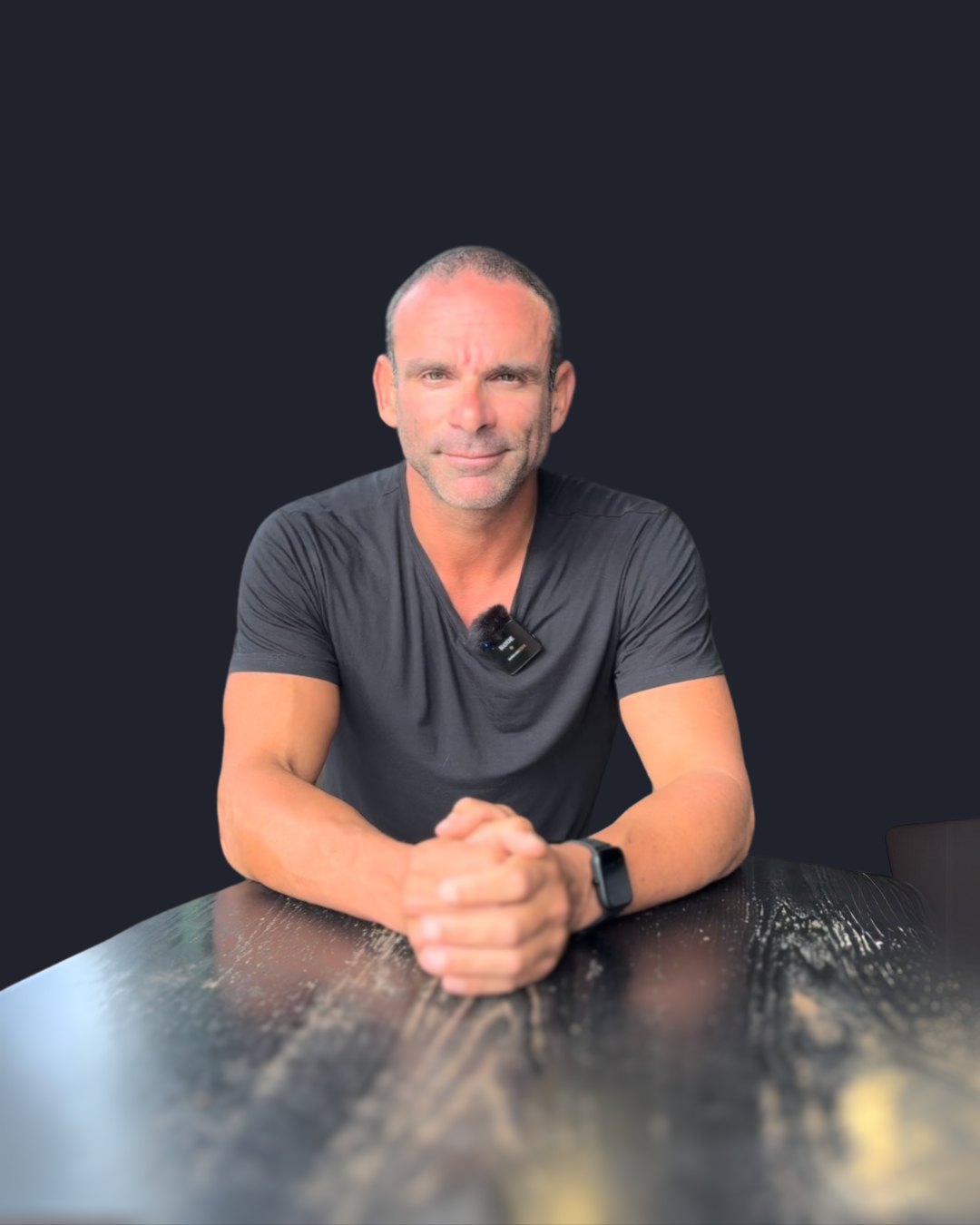
Modern Hypertrophy: From Physiology to Practice | Dr Tony Boutagy (BFI)
Live, four Mondays in November 2026

Modern Hypertrophy: From Physiology to Practice

How much volume.
How close to failure.
How often.

Four weeks live with Dr Tony Boutagy on how to program for hypertrophy. A 90 minute module every Monday, a live Q&A every Friday, and three programming frameworks: minimum effective, general, and maximal approaches.

Until week one

Module one runs live on Monday 9 November, 2pm AEDT.

Enrolment closes Sunday 8 November, the day before.

Week one is underway.

Mondays
90 min teaching module
Fridays
60 min live Q&A
Live delivery
10 hours across four weeks
Replays
In your portal within 2 hours

Why this course exists

Reading the research and writing the program are two different skills.

If you coach, you've probably noticed the hypertrophy conversation online is conflicting. Volume, failure, frequency, splits: every few weeks someone has settled it, and someone else has settled it the other way. You want to know more, you read what you can, and you still aren't sure who to believe.

And even once you've read it, the research doesn't tell you how to program for someone who wants to train twice a week for 30 minutes, or for someone preparing for a drug-free bodybuilding show.

Closing that gap is what these four weeks are for.

  • What appears to drive hypertrophy?
  • Which variables are worth manipulating, and which are preference?
  • Which methods add useful stimulus?
  • Which methods mainly add fatigue?
  • How should the training week be arranged?
  • How much training is enough, for this person?
  • What do minimum, general and maximal drug-free programming look like side by side?
Dr Tony Boutagy

A note from Tony

Over the last 18 months I've gone back and taken a deep look at the hypertrophy field again. That was helped by the interviews I've done with leading researchers, the papers each podcast episode needed as background, and stress testing my own prior beliefs, looking for the places where what I teach and what the evidence supports had drifted apart.

There are a few things I've reconsidered and changed. A few things I'd have called old-fashioned have held up better than the newer ideas competing with them. And in several places the evidence is too thin to make firm programming recommendations.

This course is where I put the current version of that thinking together and show you how I turn it into programs.

Dr Tony Boutagy

Who this is for

Coaches first. Serious lifters welcome.

Coaches and personal trainers

You design hypertrophy programs and you want them built on the evidence. But most of that evidence reaches you through social media, where volume, failure and frequency get argued week to week, and it's hard to tell what the research actually supports.

Four weeks here gives you a way to get from the evidence to the program, and the reasoning to explain it to a client who asks you why.

Serious lifters

You've run other people's programs for years and you want to understand the reasoning behind effective hypertrophy programming well enough to build your own.

You'll get a lot out of this. Worth knowing up front: the teaching is pitched at the coaching decision, so expect the room to be mostly coaches.

It suits you if

  • You program for people who want to build muscle, and no two of them train under the same conditions
  • You keep up with the research and still find the jump from paper to program harder than it should be
  • You'd rather understand why a program works than collect another template
  • You get a different answer on volume, splits and advanced methods depending on who you asked last, and you want a way to work it out for yourself

What makes this different

A current framework, not a collection of disconnected tips.

Five positions run through all four weeks.

Mechanism versus outcome

The chain from recruitment to fibre tension to the growth signal has gaps that haven't been measured directly in human training studies. So when a mechanistic claim and an outcome trial disagree, the course teaches you to weight the outcome trial.

Methods must earn their place

An advanced method isn't good or bad on its own. It either adds stimulus at a fatigue cost you can accept, or it solves a time problem. If it does neither, it's costing you something.

The week is the unit of dose

Single sessions get argued about far more than they deserve. Set the weekly dose first, then arrange it around the days and the recovery the person in front of you has.

What changed, what held

Some long-standing positions have held up well. Some haven't. Rather than a list of new findings, you get an honest account of which is which, and what it changes on the page.

Minimum, general and maximal

Most clients want a program that works based on their goals and time budget. Some need a strong general approach. A few want to push it as far as drug-free programming goes. You leave with a programming framework for each.

On how it's taught. The four-module structure is fixed. The examples and the evidence will reflect Tony's current review of the research, and the questions that come up in the room across the four weeks.

The four modules

One question, followed through four layers.

01

The physiology of hypertrophy

Understand what appears to drive hypertrophy, which variables matter, and where the evidence is limited.

What's covered

  • The measurement problem in hypertrophy research
  • Mechanical tension and the current mechanistic account
  • Motor unit recruitment and the size principle
  • Heavy and light loads when effort and volume are matched
  • Damage, swelling and the pump against actual growth
  • Strength and size overlap, but aren't identical
  • How age, sex, training status and fibre type change the response
  • Why outcome trials can outrank mechanisms when the two disagree
02

Methods and periodisation

Understand when advanced methods and periodisation add useful value, and when they mostly add fatigue.

What's covered

  • What the periodisation research shows
  • Whether periodisation outperforms non-periodised programs, and why that might be the case
  • What changes when strength, hypertrophy, power or balance is emphasised
  • What's lost during detraining, and how quickly
  • Maintenance dose
  • Muscle memory and the limits of current human evidence
  • Parallel, emphasis and sequential models
  • Progression and autoregulation
  • RPE, RIR and velocity loss
  • Drop sets, rest-pause, supersets, pre-exhaustion and cluster sets
  • Eccentrics, tempo and velocity
03

Programming approaches, splits and fatigue

Compare common programming approaches through outcome research, then arrange the week around fatigue and real-life recovery.

What's covered

  • Where training splits came from
  • The frequency debate
  • How acute fatigue mechanisms affect long-term training results
  • The recovery time course
  • Session design and exercise order
  • Ageing, and sex differences in fatigability
04

Training dose in practice

Build minimum, general and maximal drug-free hypertrophy programming frameworks for different people and different goals.

What's covered

  • Volume dose-response
  • The minimum growth dose
  • Proximity to failure
  • Failure versus one to two reps in reserve
  • Muscle length, range of motion and exercise selection
  • Free weights and machines as a transfer decision
  • Unilateral and bilateral training
  • Variation against variety
  • Dose for training status, age, sex and energy availability
  • What changed once drugs entered bodybuilding

Module titles may shift a little as the material is built. The four areas won't.

In every module

Five questions to ask of any study.

Coaches get told what a study means far more often than they get shown how to check. Every module includes a short segment on reading the paper behind the claim, so that when the next one lands and your feed has already decided what it proves, you can work it out yourself.

Why it matters. A lot of hypertrophy advice runs on mechanism: this is how the muscle is thought to work, so this is what you should do. Several steps in that chain haven't been measured directly in people who train. So when the mechanism points one way and a training study shows another, this course backs the training study, and says so rather than treating the mechanism as settled.

  1. Who was in the study, and how was it run?
  2. What did they measure it with, and how accurate is that tool?
  3. Did they measure muscle, or did they measure strength and call it muscle?
  4. Were the people in the study anything like the person in front of you?
  5. What result would have made the authors change their mind?

What's included

Ten hours live, and the materials to keep.

A teaching module every Monday and a live Q&A call every Friday, for four weeks. Every session is recorded, and the notes, slides and programming frameworks are yours afterwards with no expiry on any of them.

Your enrolment is confirmed by email as soon as you pay. The course portal opens in the week before week one.

  • Four live teaching modules 90 minutes each
  • Four live Q&A calls 60 minutes each on the Friday, questions submitted in advance
  • Course notes
  • Presentation slides
  • Three hypertrophy programming frameworks minimum, general, and maximal drug-free
  • Lifetime access to every recording all eight sessions, in your portal within two hours of each one
  • Lifetime access to the notes, slides and programming frameworks
  • Direct access to Tony during the November delivery through the four live Q&A calls

The live November schedule

Mondays teach. Fridays answer.

A 90 minute teaching module every Monday, then a 60 minute live Q&A call on the Friday of the same week. Four weeks, ten hours live.

  1. Week one
    Mon 9 & Fri 13 November
    Module 1, the physiology of hypertrophy. 90 minutes live on the Monday. Live Q&A, 60 minutes, on the Friday.
  2. Week two
    Mon 16 & Fri 20 November
    Module 2, methods and periodisation. 90 minutes live on the Monday. Live Q&A, 60 minutes, on the Friday.
  3. Week three
    Mon 23 & Fri 27 November
    Module 3, programming approaches, splits and fatigue. 90 minutes live on the Monday. Live Q&A, 60 minutes, on the Friday.
  4. Week four
    Mon 30 November & Fri 4 December
    Module 4, training dose in practice. 90 minutes live on the Monday. Live Q&A, 60 minutes, on the Friday.

Monday modules run at 2pm AEDT. Friday calls run at 2pm AEDT. Every session is recorded and the replay is in your student portal within two hours of the call ending, so a session you miss, or have to drop off part way through, is back in front of you the same day.

How the Q&A works

You send the question before the call.

Questions go in ahead of each Friday call. That gives Tony the week to prepare a proper answer, with the research or the case examples behind it, rather than working from memory on the spot.

Send your question in

Send in a question on anything in the module you want clarified or to understand further. Questions are collected before each Friday call.

Tony answers it prepared

Having the questions ahead of time means he can bring the study, the data or the case example the answer needs, instead of recalling it on the spot.

All of it is recorded

Every session is recorded, modules and Q&A both, and the replay is in your student portal within two hours of the call ending. Send your question in, and watch Tony work through it the same day.

Worth being clear about what this isn't: four live calls across the four weeks, not ongoing coaching, and not individual program review.

Who's teaching it

Dr Tony Boutagy

Exercise physiologist and strength coach. PhD in Exercise and Sport Science, and Industry Fellow in High Performance Sport at the University of the Sunshine Coast.

Tony still coaches in the gym three days a week, and reads 20 to 30 research papers a week. Both matter for a course like this one. The reading is where the material comes from. The coaching is where he finds out which parts of it survive contact with a real person.

The evidence base for this course is the expert interviews on Stronger With Time, the background reading that sat behind each episode, and the major studies and reviews across each of the module topics.

30+
Years coaching
80,000+
Programs written
50,000+
Coaches and lifters educated
33
Sports, Olympic to Masters

Student feedback

What coaches say about Tony's courses

From students of Advanced Program Mastery and other BFI courses.

"I've had the pleasure of learning from Tony since 2011, both as a student and as an athlete. I've done multiple courses from Tony, often repeating them as new science and evidence comes out. Tony has this way of educating his students without it being overwhelming, or biased. He simplifies things so well."
Hattie Boydle
Student since 2011
"I've just finished Advanced Program Mastery and I'm absolutely blown away. The content was fantastic, and the enthusiasm with which Tony delivered it and answered any questions we had was amazing. I've graduated with a sports and exercise science degree and I got so much out of the program."
Matthew Bird
Sports & exercise science graduate
"I've been in the fitness industry for over 25 years. If you want to learn how to write truly great programs and understand the process properly, from beginners right through to advanced trainees, and you care about getting your clients the very best results, I highly recommend it. Even after 25 years, I learned a great deal."
Alex Flint
Trainer
"Tony has made the structures of program design so accessible that I not only feel very comfortable designing a good training program, I've also decreased the time I need to do so by half."
Anath Alonie
Personal Trainer

The investment

Everything in one price, and no expiry on any of it.

What the price covers:

  • Four live 90 minute teaching modules
  • Four live 60 minute Q&A calls
  • Course notes and presentation slides
  • Three programming frameworks: minimum, general, and maximal drug-free
  • Lifetime access to every recording, plus the notes, slides and programming frameworks

Enrolment closes Sunday 8 November, the day before week one.

Paid in full

$797 AUD

Pay in full, $797

If paying in one go is the only thing stopping you, email [email protected].

Questions

Before you enrol

When exactly does it run?

Teaching modules run on four consecutive Mondays: 9, 16, 23 and 30 November 2026, 90 minutes each.

The live Q&A calls run on the Friday of each week: 13, 20 and 27 November, then 4 December. 60 minutes each.

Monday modules run at 2pm AEDT, Friday calls at 2pm AEDT. Both are recorded.

Are the Q&A calls recorded?

Yes. Every session is recorded, the Monday modules and the Friday Q&A calls both, and the recordings are yours for life.

The replay goes into your student portal within two hours of the call ending, so you're never waiting until the next day to catch up on one you missed.

Questions are submitted before each Friday call, so you can send yours in whether or not you make it live.

What do I keep when the four weeks are over?

All eight recordings, the four teaching modules and the four Q&A calls, plus the course notes, the presentation slides, and the three programming frameworks.

No expiry on any of it.

I coach on Mondays. Can I still do it?

Yes. Everything is recorded, and the replay is in your student portal within two hours of the session ending, so a Monday clash costs you the live room and nothing else. You can still watch it the same day.

The same goes for the Friday calls. Because questions are submitted in advance, you can send yours in whether or not you can be there live, and watch Tony work through it afterwards. Turning up live is a bonus, not a requirement.

Can I spread the cost?

The two-payment plan closed on 17 October, because a second payment would now land in the middle of the course. It's pay in full from here, up until enrolment closes on Sunday 8 November.

If paying in one go is the only thing stopping you, email [email protected] and we'll see what we can do.

I've paid. When do I get into the course portal?

Your enrolment is confirmed by email straight away, and your portal login comes through in the week before week one.

That gap is deliberate. The notes, slides and programming frameworks are built alongside the teaching, so opening the portal early would hand you an empty shell. You get it when there's something in it.

How does this fit with Advanced Program Mastery?

They sit alongside each other. Advanced Program Mastery is the deep dive into program design: ten weeks, two to three lectures a module, across goals, populations and the structure of a training year. This is four weeks on hypertrophy specifically, taught from where the research sits now.

If you've done Advanced Program Mastery, treat this as the update. You'll recognise the foundations, and the work here is what's moved since, applied to hypertrophy. If you haven't done it, you can take this on its own, and Advanced Program Mastery is where you'd go afterwards to cover more ground.

Is this for coaches or for lifters?

It's built for coaches and personal trainers who design hypertrophy programs. Serious lifters who program for themselves and want the reasoning behind it do well in it too, and they're welcome. The teaching is pitched at the coaching decision.

How technical does it get?

Technical enough to be useful, and explained as it goes. The physiology is there because it tells you which variables are worth moving, not as an end in itself.

You don't need a research background. You do need to want the reasoning rather than just the answer.

What if I'm not sure it's the right fit?

Email [email protected] with a bit about who you coach and what you're hoping to get out of it, and we'll get back to you before enrolment closes.

Program hypertrophy with reasons you can defend.

Four Mondays of teaching, four Fridays of live Q&A, ten hours in total. What changed, what held, where the evidence runs out, and three programming frameworks built from the answer. Enrolment closes Sunday 8 November, the day before week one.

Boutagy Fitness Institute Grounded in hundreds of peer-reviewed studies and three decades of coaching.